CROSSES AT NORMANDY, JUNE 1944

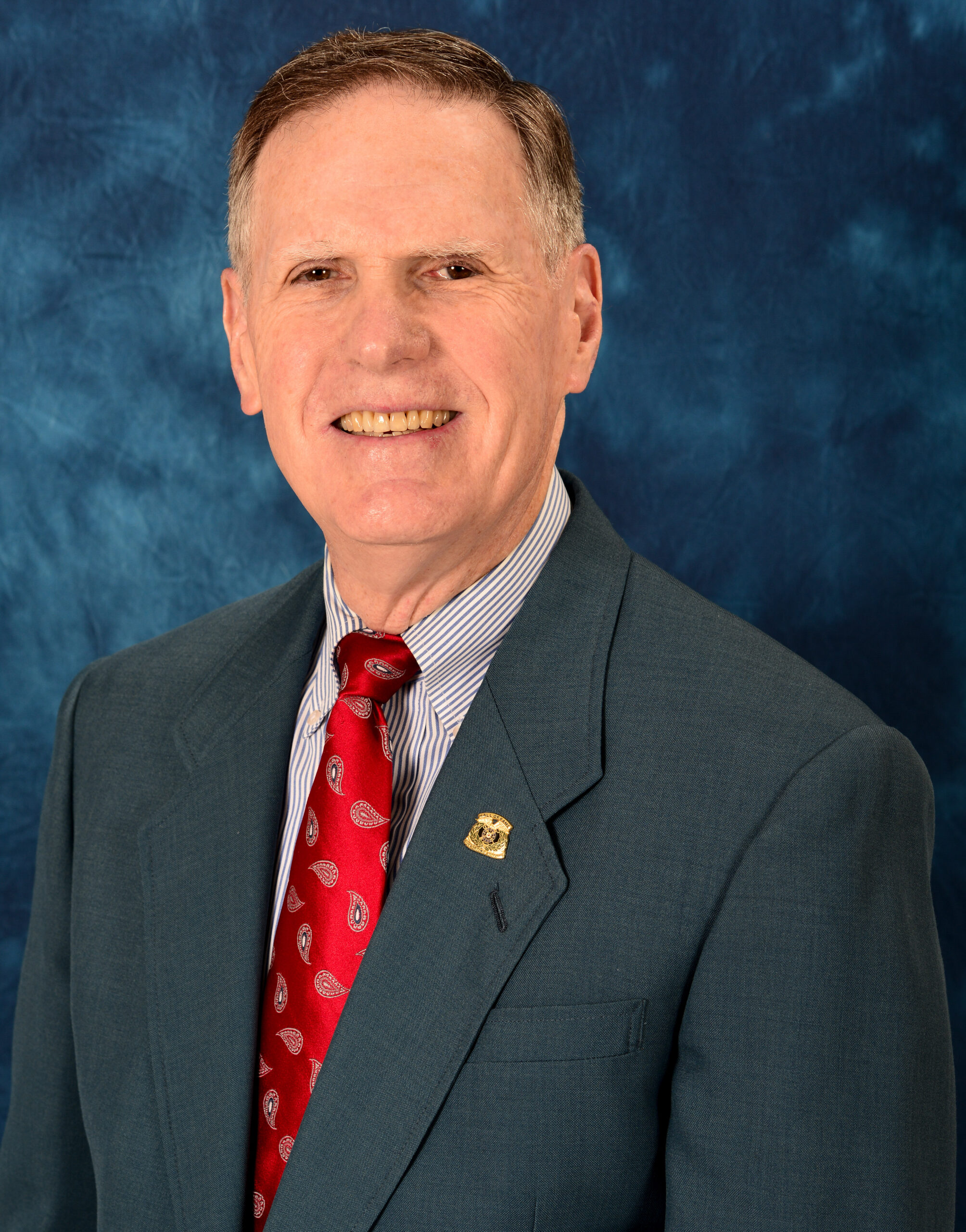
COL Elbert E. Legg
Quartermaster Professional Bulletin - Autumn/Winter 1994
This narrative relates some of my personal experiences as a sergeant squad
leader in the 603rd Quartermaster Graves Registration Company in the first days of the
Allied invasion at Normandy, France, in June 1944. As a squad leader in the 4th Platoon, I
decided it would be a good idea to have someone accompany the glider elements of the 82d
Airborne Division on D-Day. My name was submitted as the "volunteer" to make the
first U.S. Army Quartermaster graves registration combat airborne landing.
This narrative also details how a cemetery was established near a village called Blosville
about three miles south of Ste. Mere Eglise, an area with crashed gliders strewn
everywhere and hundreds of parachutes hanging from hedges, trees and houses. The Blosville
Cemetery was one of six American cemeteries established in a radius of about 20 miles.
This was due in part to the overall lack of ground communication between the attacking
elements. Graves registration services were plentiful. At the outset, the Blosville
Cemetery was intended to be temporary and primarily serve the 82nd Airborne Division. By
the time the St. Lo breakout took place and Allied forces moved east into central France,
this cemetery contained over 6,000 Allied graves.
Major Invasion Force
In March 1944, the 603rd Quartermaster Graves Registration Company, then stationed in
England, was assigned to support the VII U.S. Army Corps which was to be the major U.S.
force invading France on D-Day, 6 June 1944. Each of the four platoons of the company was
assigned to support one of the assault divisions of the VII Corps. The assignments were as
follows: lst Platoon to the 4th Infantry Division, 2nd Platoon to the 9th Infantry
Division, 3rd Platoon to the 90th Infantry Division and 4th Platoon to the 82nd Airborne
Division. Each platoon joined its respective division about two months before the
invasion. The waiting time between joining a division and the invasion itself was taken up
by weapons and special equipment training. In addition, the graves registration personnel
conducted special classes for the assault combat units on how to process and evacuate
battle dead.
The 4th Platoon, my unit, joined the 82nd Airborne Division at Leichester, England. The
Division was a veteran unit, having fought in Sicily and Italy. However, even with that
experience, the Division did not know how graves registration services would work in a
battle setting such as Normandy. No one did, including the graves registration personnel
who would be providing the services. Everyone had his own visualization of how things
should be done. In training we were taught that the combat units would evacuate their dead
to a regimental, or in some cases, division collecting point. From there the supporting
graves registration units would evacuate and process the dead and establish area
cemeteries, as opposed to unit cemeteries.
High Casualty Estimates
Because no one in the 4th Platoon was parachute-qualified, we assumed that everyone would
journey to France as part of the seaborne 82nd Airborne Division logistical trains. The
schedule called for the graves registration unit and its vehicles to arrive on the beach
about D+3. This would be too long for mass casualties to go unprocessed on the
battlefield. Estimates of battle dead for establishing the beachhead ran as high as 10,000
American soldiers.
Some pessimistic estimates had the airborne forces isolated from the beach landing forces
for as much as a week. Graves registration representation with the airborne forces would
be a valuable asset in such a situation. I asked my platoon leader, First Lieutenant Edwin
Miller, to explore the possibility of a manifest space in one of the gliders. Lieutenant
Miller returned from his next commanders meeting with word that the 82nd Airborne Division
staff was delighted to have a graves registration representative accompany the glider
elements.
On the afternoon of June lst , I took my personal and combat gear and moved to a Niesan
hut in the division headquarters area. This was the last time I would see members of my
4th Platoon until mid-June. My new bunk mates were all representatives of support and
attached units who would be going into Normandy by glider. The next day we were taken to
an airfield and given "glider training" which consisted of loading and unloading
a glider, lashing and knot tying. We trained on an American GC-4A glider. However, as it
turned out, the personnel receiving GC-4A training would enter into the objective area in
a larger, wooden, British Horsa glider. We were all given a certificate signed by the
division commander verifying we were trained and qualified to ride a glider.
The Real Thing
On the 3rd of June my group was moved to a nearby airfield and billeted in a tent city.
The area was surrounded by barbed wire and armed sentries. Everyone could sense this was
the real thing. There was nothing to do except write letters, eat and think. During the
late afternoon of 4 June, long lines of combat-equipped paratroopers marched by on the way
to their waiting aircraft. Their pockets bulged with all sorts of combat paraphernalia
including weapons, rations, grenades and land mines. The glider troops stood and watched
them march by for what seemed like hours. Darkness comes late in England in June, so we
were able to witness these same troops return from their aircraft starting about 10
o'clock. This was not to be the day of the long-awaited invasion. We understood why when,
about midnight, it started a slow rain that lasted through the night.
The next day, 5 June 1944, the paratroopers again made their slow trek to the aircraft.
About 9 o'clock that evening the transport planes could be heard warming up. In a couple
of hours it was obvious the planes were taking off and heading south. The invasion was on!
The next morning, 6 June 1944, the glider troops were able to hear a radio in the big mess
tent. The announcement was loud and clear that airborne troops had landed in Normandy.
Some of the ground crews from the air corps came in for a quick breakfast. They said many
of the planes had not returned and others making it back were badly damaged. This brought
the first true realization that this was war and our glider elements would soon be a part
of it.
Later that day the glider troops were formed up with their gear and marched to the loading
area. There were double rows of planes and gliders as far as one could see in both
directions. A long nylon cable coiled back and forth like a snake between each plane and
glider. After checking, I found my glider would be carrying a jeep, a loaded quarter-ton
trailer and 11 men. It was marked with the large invasion force white bands and bore the
identification number "32" painted on its nose. Two officers joined the group
for the first time, Major John Backer (finance) from division headquarters and a First
Lieutenant James Fraim. They chose the two jump seats in the tail section back of the jeep
and trailer. A sergeant came by and instructed the group on how to unbolt the tail
section, lift the glider nose and back the jeep out the rear. This was a procedure
peculiar to the British Horsa glider and had not been included in our previous training.
After takeoff, it was a two-hour flight heading south for Normandy. The flight was
uneventful, except most got airsick as we crossed the English Channel. As the gliders
crossed the Normandy coast, the seaborne invasion was spread out below. Thousands of
ships, battle smoke, heavy seas and the equipment jam-up on the beach were all clearly
visible. The larger guns could be heard, tracers laced the landscape and some antiaircraft
fire could be heard at a distance in our flight formation.
Eerie and Quiet
Once past the coast, it was only minutes flying time to LZ (landing zone) "W,"
our designated landing area located about eight miles inland from Utah Beach. The glider
pilots could be seen pointing out reference points and looking for their landing zone.
Finally the pilot slowly placed his hand on the overhead release handle and gave it a
downward jerk. The tow cable could be seen falling away to the front. The glider banked
hard to the right and everything was eerie and quiet.
Gliders could be seen in free flight in all directions. Our two pilots seemed to have as
much trouble avoiding collision as they did finding their landing spot in LZ
"W."
The glider came in over a hedge of trees about 80 feet high and nosed down into a level
pasture. The pilot brought the nose up just as the glider was about to touch. This
resulted in a hard pancake-type landing. The front strut came through the wooden floor of
the glider and ripped toward the rear, barely missing the legs of some of the troops. The
entire tail section, with the two attached officer passengers, broke away and rolled about
the field. The jeep and trailer broke through the floor and came to rest near ground level
on top of the vehicle rigging gear. Loose equipment of all kinds flew forward and piled
against the back of the pilot seats. Helmets that were not strapped down ended up in the
cockpit.
A sergeant in the front asked if anyone was hurt. A quick check showed everyone in the
glider was all right. Outside on the tail section was Lieutenant Fraim, shaken up but
otherwise ready to go. Major Backer had broken ribs and had to be assisted out of his
seat. The sun was still shining and the weather was beautiful in a place called Normandy,
France.
The glider had landed in its designated field in LZ "W" about three miles south
of Ste. Mere Eglise and a few hundred yards from the personnel assembly point at the
crossroads of Les Forges. It was early evening and we had about four hours before dark.
While the bulk of the troops began to free the vehicle and equipment from the glider
debris, I volunteered to look for the assembly point. Since the glider had landed in the
correct location, it was simple enough to find.
I walked south down a farm path and came to a paved road running east and west. Turning
right, I came to Les Forges Crossroads in less than 10 minutes. On the way there, I met a
patrol from the 4th Infantry Division who had come in from the beach. They said their part
of the landing was fairly easy, which was good news to me. At the assembly point, I found
several dozen soldiers milling about, looking for their units. In an apple orchard in the
southeast quadrant of the Crossroads, a collection point for the wounded was being set up.
About 20 wounded lay on the ground and were being treated by a doctor. They were all
glider crash casualties, including one pilot who had both of his feet dragged off in the
landing. More were coming in, and I realized this was a high-risk business I had gotten
myself into.
As I was returning to our glider, I also became aware of the rifle and machine gun fire
that could be heard about two hedgerows away. I ignored the firing and returned to guide
the rest of the party to the assembly point.
Hit the Ground
After gathering all our equipment, we formed into sort of a march column and headed for
Les Forges, with me leading. As we headed down the farm path, everyone was expecting an
enemy soldier to be behind every bush. Suddenly, a burst of automatic small arms fire
could be heard in the rear of the column. We all hit the ground and prepared for action. A
soldier bringing up the rear of our column shouted: "It was me, my BAR (Browning
Automatic Rifle) went off accidentally. Sorry." We were all relieved but had to
listen while Lieutenant Fraim gave a short lecture on being "trigger happy." We
reached the assembly point without further incident and the group dispersed as they
searched for their units.
Lieutenant Fraim approached me at this point and announced he was the appointed Graves
Registration Officer for the 82nd Airborne Division. He was an officer in the 407th
Airborne Quartermaster Company that was organic to the division. It would have been
worthwhile for the two of us to have coordinated activities while we were still in
England. Lieutenant Fraim said there were several dead in the immediate area, and a
cemetery site should be selected. I reminded him that our mission was to establish
collecting points, but no mention had been made of actual burials before the arrival of my
platoon. Lieutenant Fraim replied that the first collecting point should be made in one of
the many large fields in the area, and further progress would depend on the developing
situation.
First Time in My Life
After a quick check of the surrounding area, I selected a large field southwest of and
adjacent to Les Forges Crossroads as the first work site. Four dead paratroopers already
lay in the corner by the Crossroads. Five gliders were in the hedgerows that surrounded
the field. As I examined the site, two jeeps with trailers loaded with bodies drove in,
and were directed to the corner of the field where the other bodies lay. The drivers made
it clear they were delivering but not unloading. I sized up the situation and decided the
time had come for me to be, and to act like, the graves registration representative that I
was. For the first time in my life I touched a dead man. I grabbed the leg of one of the
bodies and rolled it off onto the ground. As I struggled, the drivers gave in and assisted
me with the remainder of the bodies. There were now 14 dead lying in a row and more loaded
vehicles were driving into the field.
Lieutenant Fraim came by and instructed me to start visualizing how I would lay out a
cemetery in the field. He said he would go into the village of Blosville and arrange for
civilian labor. When asked how he would pay the workers, he displayed a musette bag full
of invasion French francs intended for that purpose.
After studying the surrounding terrain, I went to one corner of the field and stuck my
heel in the ground. This would be the upper left corner of the first grave. I found an
empty K-ration carton and split it into wooden stakes. I paced off the graves in rows of
20 and marked them with the stakes. I had no transit, tape measure, shovels, picks or any
other equipment needed to establish a properly laid out cemetery. I also lacked burial
bags (mattress covers), grave registration forms and personal effects bags. The situation
rapidly exceeded what had originally been planned for the one-man graves registration
unit, and this was still the first day.
Battle for Normandy On All Sides
Lieutenant Fraim returned and said he had arranged for about 35 Frenchmen to start digging
graves the next morning. By this time about 50 bodies awaited burial. It was nearing
darkness and I began looking for a place to sleep. A major who appeared to be coordinating
local defenses helped out by assigning me a position in the orchard near where the aid
station had been set up.
The battle for Normandy was progressing on all sides, but I had been too busy with the new
cemetery to get involved. About a half mile north of Les Forges Crossroads at a location
called Hill 20 on the road to Ste. Mere Eglise, the Germans had a strong emplacement with
a dug-in 88mm gun. Attempts to dislodge them with riflemen had failed. Two 4th Division
tanks made it in from the beach and attacked up the road. Both were knocked out by the
German gun about 200 yards north of Les Forges.
I found an abandoned foxhole in the middle of the orchard and set up housekeeping. Sleep
came easily as the fatigue of the day's events had begun to take its toll.
Some time after midnight a German patrol stumbled into the orchard and was challenged from
all sides by rifle fire. A lively exchange took place, and the German patrol leader could
be clearly heard shouting and directing his men out of the danger area. I did not feel
obliged to take part and did not leave my foxhole or fire a shot.
Dawn came early and the troopers began improving their defenses and prepared to attack the
pockets of resistance about them. The skirmish the night before had not resulted in any
friendly casualties nor, apparently, any on the German side. The hedgerow on the south
side of the orchard was strewn with battle debris, mostly of German origin.
I gathered my gear and headed toward the cemetery site. As I crossed the road I could see
a column of Frenchmen coming my way, carrying a mixture of picks and shovels and lunch
pails. All the men were very old or crippled in some way. It took little time to assign
them to digging graves. There was little conversation since I spoke no French and they
spoke no English. The long row of bodies and marking stakes made it apparent what was to
be done.
Parachute Becomes 'Filing Cabinet'
Once
everyone had his assignment and was digging, I began the job of processing bodies. There
were plenty of parachutes in the field, so nylon parachute panels served as personal
effects bags and body bags. Each body was searched and all personal effects were secured,
but no inventory was taken. A ruled tablet served as Graves Registration Form No. 1. Both
identification tags were left with the body until it was ready to be placed into a grave.
One tag stayed with the body after burial and the other was attached to the stake that
served as a grave marker. The personal effects and Form No. 1 were kept together and
wrapped in a parachute that served as a "filing cabinet" for the first days of
the invasion. About 50 bodies were interred on D+1. More were arriving all the time.
Soldiers were bringing in map coordinates and other information about the location of
bodies and, in particular, crashed gliders and planes that needed to be cleared. I had no
capability to start collection and evacuation. I did keep a log of information and a map
marked with body locations which would later be passed on to graves registration
personnel.
D+1
About 1600 hours on D+1, Lieutenant Fraim came by to inform me that I should stop work and
move with the other troops located around Les Forges Crossroads to a safer location. The
Frenchmen were paid and instructed to return when they again saw activity around the
cemetery. All graves were closed and a military chaplain came to conduct an all-faith
burial service. I hid the personal effects parachute in a nearby hedgerow and with my gear
headed for a group of vehicles forming near the Crossroads.
I did not know where we were going or how long we would be gone. The convoy was made up of
miscellaneous vehicles from the 82nd Airborne Division, the 4th Infantry Division and a
tank destroyer unit. We moved west to the to the town of Chef du Pont, which had been
heavily damaged, then north about a mile where we joined a dug-in element of a parachute
unit.
I was not under anyone's direct control so I found a good spot and took a position in a
hedgerow for the night. As darkness fell, firing could be heard in the distance in all
directions. Shortly after midnight a German aircraft flew over our positions and dropped
what was judged to be a 500-pound bomb. It landed in an empty field about 200 yards away
and blew a huge crater. The next morning, the area where I slept was recognizable as a
portion of the 82nd Airborne Division Command Post.
Shortly after noon a small convoy formed to return to the Les Forges Crossroads area. I
hitched a ride on a jeep trailer and returned to the cemetery. There I found the French
labor detail waiting for instructions, and I quickly put them to work. During the previous
night a sharp firefight had taken place around the Crossroads and apple orchard area.
Battle debris was everywhere, including German helmets, weapons and gas masks.
The cemetery area had not been disturbed.
D+2
This was D+2 and the bodies were piling up, including about 25 enemy dead. Lieutenant
Fraim arrived in midafternoon and said he would look for more laborers for the next day.
He indicated he would also check to see if he could get German prisoners of war to assist
with the digging. Getting guards and digging tools would be a problem. A few more bodies
were interred on D+2, and several more rows of graves were marked off.
The laborers were encouraged to return early the next day and to bring their friends.
Before they left, I had them dig a slit trench near the hedgerow at the corner of the
cemetery. This was covered by a tent shelter half and would serve as my home for graves
registration activities during the coming days.
D+3
D+3 dawned as a busy day. Bodies aboveground now numbered in the hundreds, with about half
being German. About 70 Frenchmen arrived and dug over a hundred graves. I was pressed to
do even rudimentary processing of the bodies. Late in the afternoon, Lieutenant Fraim
arrived with a big civilian truck loaded with prisoners of war. They had military police
guards but no tools. The Frenchmen were not eager to lend their tools, so
the prisoners were sent to the beach for evacuation.
D+4 to D+7
On D+4 I heard that some graves registration personnel were in the area of Ste. Mere
Eglise and had started a cemetery. I had no time or transportation to go look for them, so
the work continued at the Blosville Cemetery. A Quartermaster Service Platoon with
vehicles and pioneer tools arrived. About 150 German prisoners of war also arrived and
were assigned digging duties. Activity was picking up. The big limitation was processing
bodies to insure proper identification and security of personal effects. A second plot of
200 grave sites was marked off to provide work space for all the diggers. French laborers
were now handling and moving all bodies.
This level of activity continued until D+7 when a portion of my unit, the 4th Platoon,
603rd
Quartermaster Graves Registration Company, arrived and took over the operation of the
cemetery. They found much of the work had to be done over, including relocation of all
bodies. About 350 Americans and 100 Germans were underground by this time. Several hundred
Germans awaited burial, but the backlog of American dead was less than 100.
I spent the first couple of days after the arrival of my platoon organizing work details
and sending out collecting teams to recover some of the bodies at locations I had marked
on my map. The most difficult recoveries were from crashed and burned troop transport
planes and from burned-out tanks. Several bodies were recovered from the inundated flood
plain of the Merderet River where paratroopers had drowned on D-Day. The fighting units of
the 82nd Airborne Division were now evacuating their battle dead directly to the cemetery.
New, 200-grave burial plots were surveyed and interments were being made according to the
book. There were now mattress covers to serve as body bags and proper marking stakes for
each grave. All the information in the temporary records was transferred to Graves
Registration Form No. 1, and personal effects were inventoried
and placed in regulation bags.
Weapons, ammunition and equipment kept piling up at the cemetery. Most bodies arrived
fully clothed and with web gear. Some had gas masks and small arms weapons and nearly all
had some sort of ammunition and rations. All usable government equipment was taken from
the bodies. Initially, all GI (government issue) equipment was thrown into a big pile and
made available to anyone who wanted it.
When the 4th Platoon arrived to take over the cemetery, personnel were assigned to sort
the equipment and secure the ammunition. The French laborers watched longingly as most
American bodies were buried with their jump boots. Later they were allowed to take the
heavy leather boots from some of the German dead.
Today A Small Monument
About June 20th, the 4th Platoon moved to Orglandes, approximately 10 miles northeast
toward Cherbourg, and established a permanent German cemetery. The Blosville Cemetery was
turned over to another graves registration unit who continued to bury Americans until
after the St. Lo breakout. Today a small monument at the Les Forges Crossroads marks the
Blosville Cemetery location and records that 6,000 Allied troops from the Normandy
invasion were buried there. Later, the bodies were moved to consolidated permanent
cemeteries in Normandy or sent back to the U.S. for burial.
Burial of the German dead at the Orglandes Cemetery was much the same as for Americans.
Efforts were made to identify every body. One identification tag was left on the remains
and the other placed with the personal effects. All personal items were secured and
forwarded through Red Cross channels to the next of kin. Most of the bodies had been
searched and some effects removed by the time they got to the cemetery.
Shortly after the move to Orglandes, I asked for and received a permanent transfer to the
82nd Airborne Division. I was further assigned to the 407th Airborne Quartermaster
Company. When the Division returned to England for reorganization and refitting, I
attended parachute school and in September participated in the airborne invasion of
Holland. Here, I again started a temporary cemetery, five miles south of Nijmegen.
After the war, I received a Regular Army Commission through the Reserve Officers' Training
Corps (ROTC) at West Virginia University and served as an Infantry officer through three
more wars: Korea, Dominican Republic and Vietnam. I retired as a Colonel in 1970.
The 603rd Quartermaster Graves Registration Company remained attached to the VII U.S. Army
Corps throughout most of World War II. They helped establish and worked most of the large
permanent cemeteries in France, Luxembourg, Belgium and Holland. Their example of graves
registration support for an army corps is considered a classic and was to serve as a model
for other units.
| Return To: Mortuary Affairs History Page |